ಉಪನಯನ — ಬೆಂಗಳೂರು ಕುಟುಂಬಗಳಿಗೆ ಮಾರ್ಗದರ್ಶಿ
Upanayana (Brahmopadesha) in Bengaluru: Age, Muhurta, Rituals and Planning
The sacred-thread ceremony explained — the right age, auspicious months, the sequence from Udaka Shanti to Brahmopadesha, venue choices and what to arrange.
ಉಪನಯನ ಎಂದರೇನು
What Upanayana is
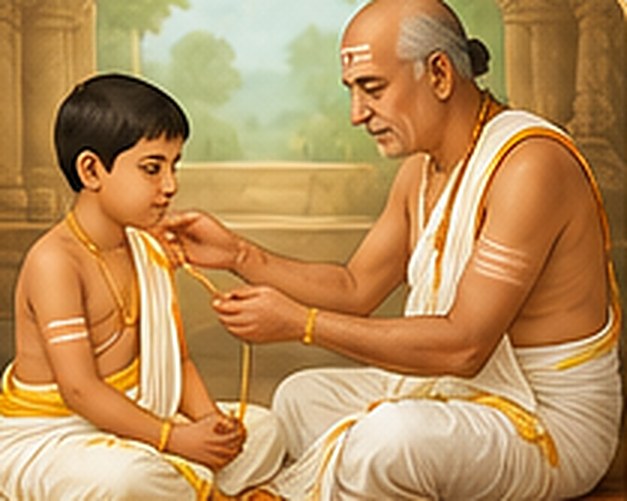
Upanayana (ಉಪನಯನ, also ಬ್ರಹ್ಮೋಪದೇಶ / ಜನಿವಾರ ಕಾರ್ಯ) is the samskara that initiates a boy into Vedic study. He receives the yajnopavita (sacred thread), the Gayatri mantra from his father or acharya, and the duty of Sandhyavandane thrice a day. It marks the beginning of brahmacharya — the student stage of life.
ವಯಸ್ಸು ಮತ್ತು ಕಾಲ
Age and timing
The shastras prescribe the 8th year from conception (about 7 years of age) for Brahmana families, 11th for Kshatriya and 12th for Vaishya, with an upper limit of 16. Today most Bengaluru families do it between ages 7 and 12, often timing it with school summer holidays.
Uttarayana — the sun's northward journey from Makara Sankranti (mid-January) to mid-July — is preferred. Within it, Magha, Phalguna, Chaitra, Vaishakha and Jyeshtha are the best months. Shukla paksha, a good nakshatra and Guru bala (Jupiter's favourable transit for the boy) are checked. As with griha pravesha, the adhika masa (Adhika Jyeshtha in 2026, roughly mid-May to mid-June) is avoided.
ಕ್ರಮ
The sequence of rituals
- Previous evening — Udaka Shanti: a long shanti recitation with kalasha water for the well-being of the family and the boy (Yajurveda families); Nandi / Nandi Shraddha to invoke ancestors' blessings.
- Morning — Ganapathi pooja, Punyahavachana, Kumara bhojana (the boy eats with his mother for the last time as a child, alongside young boys).
- Kshaura (ceremonial haircut) and snana; new clothes (kaupina, dhoti, uttariya).
- Yajnopavita dharana — the sacred thread is worn; danda (staff) of palasha or bilva is given; mekhala (munja grass girdle) tied.
- Brahmopadesha — under a cloth screen, the father imparts the Gayatri mantra to the son. This is the heart of the ceremony.
- Homa — Samidadhana: the boy offers samits into the fire, his first Vedic karma.
- Bhikshakarana — the brahmachari asks for bhiksha (alms) beginning with his mother; relatives fill his jholige with rice, fruit and gifts.
- Sandhyavandane instruction — the purohith teaches the first Sandhyavandane, which the boy continues daily.
ಸ್ಥಳ
Venue: home, temple or hall?
A home Upanayana (40–60 guests) is intimate and increasingly common in Bengaluru. Temple choultries in Malleshwaram, Basavanagudi, Jayanagar and Rajajinagar are popular for 100–200 guests. Kalyana mantapas suit larger gatherings. Whichever you choose, the homa needs an open, ventilated space; check with the venue in advance.
Two purohiths are usual — one leading and one assisting with the homa and Udaka Shanti. Ask that both be from your shakha (e.g. Yajurveda–Taittiriya, Rigveda–Ashvalayana, Samaveda) because the Sandhyavandane taught depends on it.
ಸಿದ್ಧತೆ
Planning checklist
- Fix the muhurta 2–3 months ahead with your purohith; book venue and cook next.
- Samagri — the purohith will give a shakha-specific list: yajnopavita sets, munja, danda, kaupina, jholige, homa dravyas, darbha, samits, ghee (about 1 kg), rice, and pooja basics.
- Confirm the Udaka Shanti evening arrangements — this takes 2–3 hours and needs a quiet space.
- After the ceremony, help the boy build the Sandhyavandane habit — a short morning and evening routine.
ಪ್ರಶ್ನೆಗಳು
Frequently asked questions
Can Upanayana be done in Dakshinayana?
It is traditionally avoided; Uttarayana (mid-January to mid-July) is preferred. Some families in special circumstances take a purohith's advice for a Dakshinayana date.
How many days does Upanayana take?
Two — the Udaka Shanti / Nandi on the previous evening and the main ceremony the next morning, ending by noon. Some families compress it into one long morning.
Is a Nandi Shraddha compulsory?
In most traditions yes; it seeks the blessings of ancestors before an auspicious samskara. It is a short, sattvic ritual done without any sorrowful elements.
ಮುಂದೆ ಓದಿ
Useful links
Share this guide with family planning a pooja.
More to read
ಷಷ್ಟ್ಯಬ್ದಿಪೂರ್ತಿ (ಷಷ್ಠಿಪೂರ್ತಿ) — 60ನೇ ವರ್ಷದ ಸಂಭ್ರಮ
Shashti-poorthi: Celebrating a Loved One's 60th the Traditional Way
Samskarasಪಿತೃ ಪಕ್ಷ ಮತ್ತು ಮಹಾಲಯ ಅಮಾವಾಸ್ಯೆ — ಶ್ರಾದ್ಧ ಮಾರ್ಗದರ್ಶಿ
Pitru Paksha & Mahalaya Amavasya: A Gentle Guide to Shraddha
Samskarasನಾಮಕರಣ — ಮಗುವಿನ ಹೆಸರಿಡುವ ಸಂಸ್ಕಾರ