ಪಿತೃ ಪಕ್ಷ ಮತ್ತು ಮಹಾಲಯ ಅಮಾವಾಸ್ಯೆ — ಶ್ರಾದ್ಧ ಮಾರ್ಗದರ್ಶಿ
Pitru Paksha & Mahalaya Amavasya: A Gentle Guide to Shraddha
What Pitru Paksha means, why families remember their ancestors with tarpana and shraddha, how Mahalaya Amavasya works, and how to arrange the rites respectfully in Bengaluru.
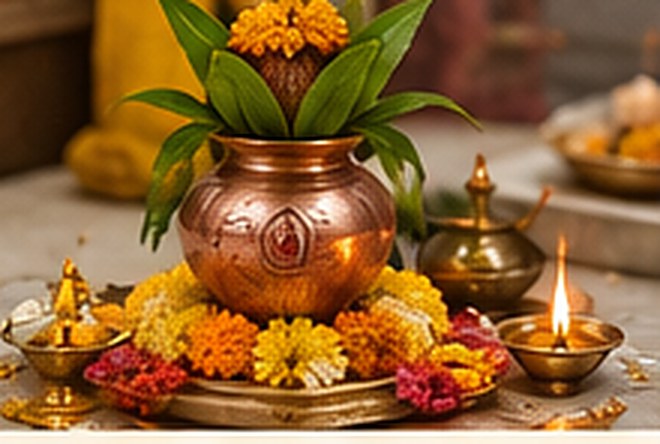
ಪೂರ್ವಜರ ಸ್ಮರಣೆ
Remembering those who came before us
Pitru Paksha (ಪಿತೃ ಪಕ್ಷ) is a fortnight set aside to remember and thank our ancestors — the parents, grandparents and elders whose lives made ours possible. Through tarpana (water offerings) and shraddha, families express gratitude and pray for the peace of those who have passed on. It is a quiet, tender time rather than a festive one, and doing it with sincerity matters far more than doing it elaborately.
The fortnight concludes with Mahalaya Amavasya, when rites are offered for all ancestors together, including those whose date of passing is not known. In 2026, Mahalaya Amavasya falls on Saturday, 10 October.
ಶ್ರಾದ್ಧದ ಕ್ರಮ
How shraddha is observed
- The tithi — many families perform shraddha on the tithi (lunar day) on which the ancestor passed away, which falls within the Pitru Paksha fortnight.
- Tarpana — water mixed with sesame (til) is offered to the pitrus, usually by the son or a close male relative, guided by a purohith.
- Pinda pradana — rice balls are offered in some traditions as part of the shraddha.
- Brahmana bhojana / anna daana — feeding others in the ancestors' name is central; many simply offer food to those in need.
- A crow or cow offering (kaka bali, go grasa) is made where possible, as a symbolic sharing.
ಬೆಂಗಳೂರಿನಲ್ಲಿ ಗೌರವಪೂರ್ವಕ
Doing it respectfully in Bengaluru
- Tell your purohith your sampradaya and shakha — shraddha vidhi differs across Smartha, Madhwa and Srivaishnava families.
- River ghats and tanks (such as at temples) are used for tarpana; a purohith can also guide it at home.
- Book 1–2 weeks ahead — Pitru Paksha is a busy time for purohiths.
- If travel or health prevents the full rite, a simple tarpana and anna daana done with devotion is accepted.
ಪ್ರಶ್ನೆಗಳು
Frequently asked questions
When is Mahalaya Amavasya in 2026?
Mahalaya Amavasya, which concludes Pitru Paksha, falls on Saturday, 10 October 2026. Rites for all ancestors are offered on this day.
Who can perform shraddha?
Traditionally the son performs shraddha, but where that is not possible another close relative may, guided by a purohith. What matters most is that it is done with sincerity.
What if I don't know the exact tithi of my ancestor's passing?
Rites can be offered collectively on Mahalaya Amavasya, which is meant precisely for all ancestors, including those whose tithi is unknown.
ಮುಂದೆ ಓದಿ
Useful links
Share this guide with family planning a pooja.
More to read
ಷಷ್ಟ್ಯಬ್ದಿಪೂರ್ತಿ (ಷಷ್ಠಿಪೂರ್ತಿ) — 60ನೇ ವರ್ಷದ ಸಂಭ್ರಮ
Shashti-poorthi: Celebrating a Loved One's 60th the Traditional Way
Samskarasನಾಮಕರಣ — ಮಗುವಿನ ಹೆಸರಿಡುವ ಸಂಸ್ಕಾರ
Naamakarana: A Complete Guide to the Baby Naming Ceremony in Karnataka
Samskarasಉಪನಯನ — ಬೆಂಗಳೂರು ಕುಟುಂಬಗಳಿಗೆ ಮಾರ್ಗದರ್ಶಿ