ಬೆಂಗಳೂರಿನಲ್ಲಿ ಸರಿಯಾದ ಪುರೋಹಿತರನ್ನು ಹೇಗೆ ಆರಿಸುವುದು
How to Choose the Right Purohith in Bengaluru: Tradition, Trust and Language
Tradition and shakha, verification, language, what to agree upfront and red flags to watch for — a practical guide for families booking a priest for a home pooja.
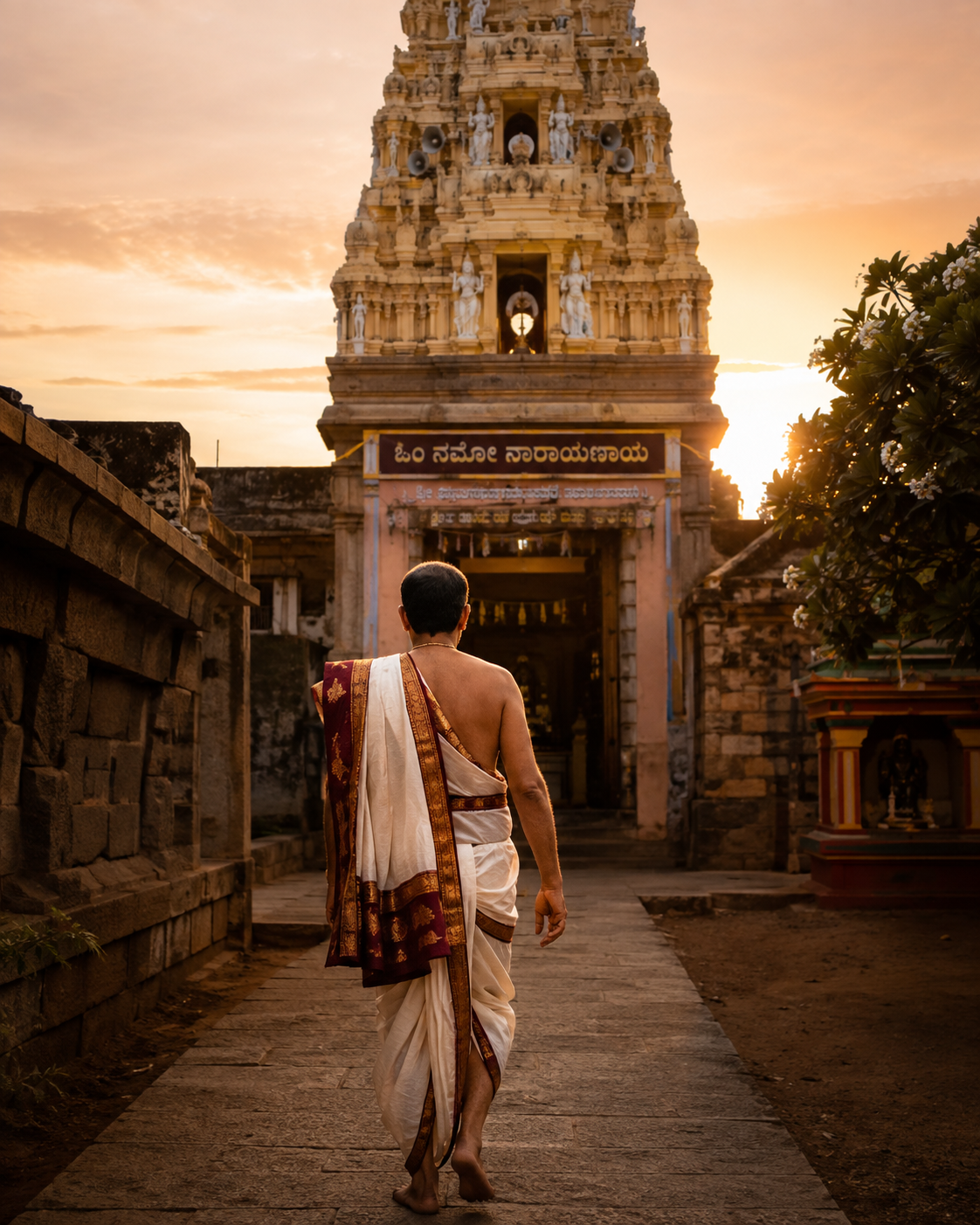
ಮೊದಲು ಸಂಪ್ರದಾಯ
Start with tradition, not availability
A Madhwa family's Satyanarayana pooja, a Smartha family's Upanayana and a Srivaishnava family's Griha Pravesha follow different sankalpas, mantras and sequences. The single most important question is therefore: does the purohith perform in your sampradaya? Ask about their Veda and shakha (for example Yajurveda–Taittiriya, Rigveda–Ashvalayana) if the ceremony is a samskara such as Upanayana or Vivaha.
Veerashaiva–Lingayat families should ask for a Jangama or a purohith trained in the Lingayat vidhi; many community and kuladevata rituals also have specific officiants. Purohith Connect lets you filter by tradition for exactly this reason.
ಪರಿಶೀಲನೆ ಮತ್ತು ವಿಶ್ವಾಸ
Verification and trust
You are inviting someone into your home, often early in the morning, around children and elders. Ask for identity verification and references — a pathashala where they trained, a temple they serve, or families they have performed for in your locality. On Purohith Connect every purohith completes KYC before appearing in listings, and profiles show tradition, languages and the ceremonies they perform.
ಭಾಷೆ
Language matters more than people expect
A good purohith explains what each step means in a language the family follows — Kannada for most Bengaluru households, but also Telugu, Tamil, Hindi or English for mixed or migrant families. For children's samskaras this is what turns a ritual into a memory. Ask specifically: 'Will you explain the steps in Kannada as we go?'
ಮೊದಲೇ ಒಪ್ಪಿಗೆ ಮಾಡಬೇಕಾದ ಐದು ಅಂಶಗಳು
Agree these five things upfront
- Samagri — who arranges what; whether a kit is being brought.
- Number of purohiths — a homa or vivaha may need two or more vaidikas.
- Duration — start time relative to the muhurta and expected finish.
- Dakshina — discuss it respectfully and clearly before the day, along with travel arrangements.
- Contingency — what happens if the muhurta is missed due to traffic or a delay.
ಎಚ್ಚರಿಕೆ ಸೂಚನೆಗಳು
Red flags
- Unwilling to name their tradition or teacher.
- Pressure to add extra homas 'for doshas' without seeing a jataka.
- No clarity on samagri until the last moment.
- Won't share a phone number or arrive without confirming the address the previous day.
ಪ್ರಶ್ನೆಗಳು
Frequently asked questions
How early should I book a purohith in Bengaluru?
For a Satyanarayana pooja or Ganapathi homa, one week is enough. For Griha Pravesha, Upanayana or Vivaha — where the muhurta is fixed — book 3–6 weeks ahead, especially in Vaishakha and Magha when demand peaks.
Can a purohith of another tradition perform our pooja?
For simple poojas, yes with small adjustments. For samskaras (Upanayana, Vivaha, Shraddha), it is strongly advised to have a purohith from your own sampradaya and shakha.
What if the purohith doesn't speak Kannada?
Many Bengaluru purohiths speak Kannada plus Telugu, Tamil or Hindi. On Purohith Connect you can filter by language so the family can follow every step.
ಮುಂದೆ ಓದಿ
Useful links
Share this guide with family planning a pooja.
More to read
ಎನ್ಆರ್ಐ ಇ-ಪೂಜೆ — ಬೆಂಗಳೂರಿನಿಂದ ಮಾರ್ಗದರ್ಶಿ
E-Pooja for NRI Families: How to Do a Ritual from Abroad, the Right Way
Purohith Guideಮನೆ ಪೂಜೆಗೆ ಮೊದಲು ಕೇಳಬೇಕಾದ 10 ಪ್ರಶ್ನೆಗಳು
10 Questions to Ask Before Booking a Home Pooja
Poojas & Homasದೀಪಾವಳಿ ಲಕ್ಷ್ಮೀ ಪೂಜೆ — ಮನೆಯಲ್ಲಿ ಹೇಗೆ ಮಾಡುವುದು