ಸತ್ಯನಾರಾಯಣ ಪೂಜೆ ಸಾಮಗ್ರಿ ಪಟ್ಟಿ
Satyanarayana Pooja Samagri List: Everything to Arrange at Home
A complete, printable checklist of what to buy for a Satyanarayana vrata at home — pooja basics, kalasha items, the sapada bhakshya prasada, and what the purohith usually brings.
ಸತ್ಯನಾರಾಯಣ ವ್ರತದ ಮಹತ್ವ
Why families do a Satyanarayana pooja
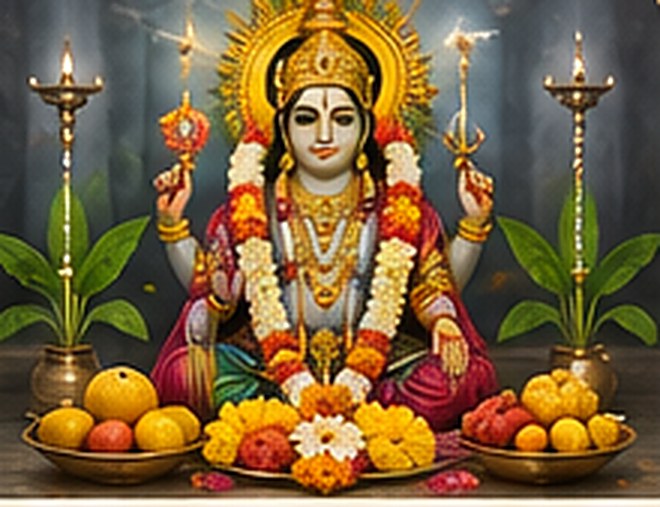
Satyanarayana vrata (ಸತ್ಯನಾರಾಯಣ ವ್ರತ) is the most widely performed household pooja in Karnataka. It is offered in gratitude — after a griha pravesha, a wedding, a new job, a recovery from illness — and on Pournami, Ekadashi or Sankranti days. The pooja is a Vishnu worship followed by the reading of five katha chapters from the Skanda Purana, and it ends with the distribution of the sapada bhakshya prasada.
A typical home Satyanarayana pooja with a purohith takes 1.5 to 2 hours in the evening. It can be done in any tradition — Smartha, Madhwa or Srivaishnava families all perform it, with small variations in the sankalpa and mantras.
ಮೂಲ ಸಾಮಗ್ರಿ
Pooja basics
- Turmeric (arishina) and kumkuma, sandal paste (gandha), akshata (rice mixed with turmeric)
- Betel leaves (veelyadele) 25–30, betel nuts (adike) 25, dry dates or almonds for tamboola
- Camphor, agarbatti, ghee for lamps, 2 brass lamps (deepa) with cotton wicks
- Flowers — loose flowers 2 mudi, garlands 2, tulasi leaves (essential for Vishnu), a few lotus if available
- Fruits — 5 varieties including bananas (a full bunch or 12 pieces)
- Coconuts 5, mango leaves for torana and kalasha
- Panchamrita — milk, curd, honey, ghee, sugar (small quantities each)
- A new cloth (blouse piece or dhoti/angavastra) for the deity and the kalasha
- Yajnopavita (sacred thread) pair, sacred thread for vrata (raksha) if your family ties it
ಕಲಶ ಮತ್ತು ಮಂಟಪ
Kalasha and mandapa items
- Kalasha — a brass or silver pot, filled with water; one coconut to place on it
- Rice — about 2 kg to draw the mandala and hold the kalasha; a wooden plank (mane) or a small table
- Satyanarayana photo or shaligrama / small Vishnu idol; a small Ganapathi idol or turmeric Ganapathi
- Plantain stems and leaves (optional but traditional) to make a canopy
- Silver or copper coin (dakshine) for the kalasha, a few 1-rupee coins for sankalpa
- Panchapatra and uddharane (small cup and spoon), a plate (harivana) and a bell
ಸಪಾದ ಭಕ್ಷ್ಯ
Sapada bhakshya — the prasada
The prasada is made in the measure of 'sapada' — one and a quarter — of each ingredient: wheat rava (or sooji) roasted in ghee, sugar, milk, ripe banana, ghee, and honey or curd. Some families use 1¼ cups, others 1¼ kg for a large gathering. The mixture is offered as naivedya and must be shared with everyone present; the vrata katha itself narrates the consequence of leaving without accepting prasada.
Keep the sapada bhakshya covered near the mandapa before the pooja begins; it is offered during the naivedya after the katha.
ಪುರೋಹಿತರು ತರುವುದು vs ನೀವು ಸಿದ್ಧಪಡಿಸುವುದು
What the purohith usually brings vs. what you arrange
Most purohiths carry their own pooja book, darbha grass, a small homa set if required, and often the sacred thread and kalasha cloth. Perishables — flowers, fruits, coconuts, banana leaves, milk and the prasada — are arranged by the family. When you book through Purohith Connect, you can ask the purohith to bring a full samagri kit and only keep the fruits, flowers and prasada on your side.
ಪ್ರಶ್ನೆಗಳು
Frequently asked questions
When is the best time for Satyanarayana pooja?
Evening on Pournami (full moon) is most traditional. Ekadashi, Sankranti days and the day of a griha pravesha or wedding are also common. Any day agreeable to the family is acceptable in most traditions.
How long does a Satyanarayana pooja take at home?
About 1.5 to 2 hours including the five katha chapters, aarti and prasada distribution.
Can the pooja be done without a purohith?
Yes, many families read the katha themselves. However, the sankalpa, kalasha sthapana and the Vishnu shodashopachara are best done by a purohith, particularly the first time or when done as a vow.
ಮುಂದೆ ಓದಿ
Useful links
Share this guide with family planning a pooja.
More to read
ದೀಪಾವಳಿ ಲಕ್ಷ್ಮೀ ಪೂಜೆ — ಮನೆಯಲ್ಲಿ ಹೇಗೆ ಮಾಡುವುದು
Deepavali Lakshmi Pooja at Home: A Warm, Simple Guide for Your Family
Poojas & Homasಗಣಪತಿ ಹೋಮ vs ನವಗ್ರಹ ಹೋಮ
Ganapathi Homa vs Navagraha Homa: Which One Does Your Family Need?
Poojas & Homasರುದ್ರಾಭಿಷೇಕ — ಮಹತ್ವ ಮತ್ತು ವಿಧಿ