ಗೃಹ ಪ್ರವೇಶ ಮುಹೂರ್ತ 2026 — ಬೆಂಗಳೂರು
Griha Pravesha Muhurta 2026: How Bengaluru Families Pick the Right Date
Which months, tithis, nakshatras and weekdays are auspicious for a house-warming in 2026, why the adhika masa is avoided, and what actually happens on the day.
ಗೃಹ ಪ್ರವೇಶ ಎಂದರೇನು
What griha pravesha is — and its three kinds
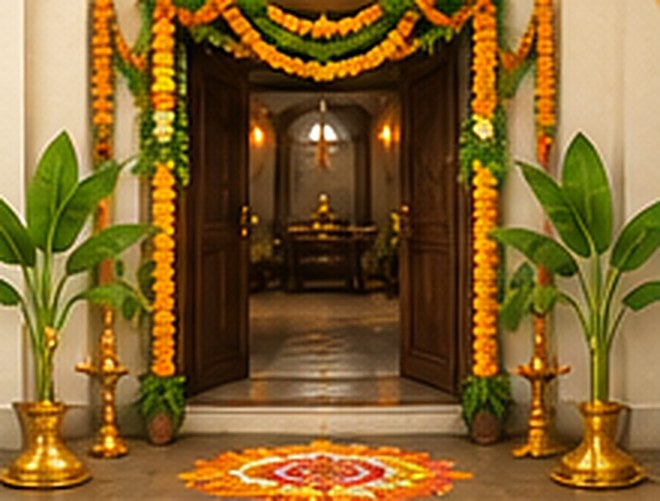
Griha pravesha (ಗೃಹ ಪ್ರವೇಶ) is the ceremonial first entry into a home. In the Karnataka tradition it is done with a Ganapathi pooja, Punyahavachana, Vastu Shanti and the boiling-over of milk in the new kitchen — a wish that the household may always overflow with abundance.
The shastras describe three kinds: Apoorva (ಅಪೂರ್ವ) — the first entry into a newly built home on new land; Sapoorva (ಸಪೂರ್ವ) — re-entering an existing house after a long stay elsewhere or after buying a resale flat; and Dwandwa (ದ್ವಂದ್ವ) — entry after repairs, renovation or a calamity such as fire or flood. The rituals are similar, but the sankalpa and the extent of Vastu Shanti differ, which is why your purohith will ask which of the three yours is.
ಶುಭ ಮಾಸಗಳು
Auspicious months in 2026
Traditionally the best months for griha pravesha are Vaishakha, Jyeshtha, Magha and Phalguna. Kartika and Margashira are considered acceptable. Ashadha, Bhadrapada, Ashwayuja and Pushya are avoided, as is any adhika (extra) masa.
2026 has an adhika masa — Adhika Jyeshtha — falling roughly from mid-May to mid-June 2026. Most families in Bengaluru therefore plan around it: either in Vaishakha (mid-April to mid-May) or in nija Jyeshtha (mid-June to mid-July). If your possession date lands inside the adhika masa, a simple 'vastu pooja and key-taking' is done, and the formal griha pravesha follows once the adhika masa ends.
- Best: Vaishakha, Jyeshtha (nija), Magha, Phalguna
- Acceptable: Kartika, Margashira
- Avoid: Ashadha, Bhadrapada, Ashwayuja, Pushya, any adhika masa
- Also avoid: Dakshinayana punyakala days, eclipses, Shraddha paksha (Pitru Paksha)
ತಿಥಿ, ನಕ್ಷತ್ರ, ವಾರ
Tithi, nakshatra and weekday
Within a good month, the panchanga is used to fix the exact day. Shukla paksha (the waxing fortnight) is preferred. Tithis 2, 3, 5, 7, 10, 11 and 13 are favoured; Amavasya, Chaturthi, Navami and Chaturdashi are avoided.
Preferred nakshatras are the 'sthira' and 'mridu' stars — Rohini, Mrigashira, Chitra, Anuradha, Revati, Uttara Phalguni, Uttarashada, Uttarabhadra, Pushya, Shravana, Dhanishta and Shatabhisha. Monday, Wednesday, Thursday and Friday are the usual weekdays; Tuesday and Saturday are avoided. Rahu kala, Yamaganda and Gulika kala are skipped on the chosen day, and the lagna (rising sign) is usually a fixed sign for stability.
This is exactly what a muhurta consultation covers — bring your family's jataka (or at least the head of household's rashi and nakshatra) so the purohith or astrologer can also check tarabala and chandrabala for you.
ಆ ದಿನದ ಕ್ರಮ
What happens on the day
- Dwara pooja — the main door is decorated with mango leaves (torana), a kalasha is placed and the threshold is worshipped.
- Ganapathi pooja and Punyahavachana — obstacles removed, the house and family purified with sanctified water.
- Vastu Shanti / Vastu homa — Vastu Purusha and the directional deities are propitiated; this is the heart of an Apoorva griha pravesha.
- Navagraha homa (optional) — often added if the family's jataka indicates a weak period.
- Pravesha — the lady of the house enters right foot first with a kalasha of water or milk, followed by the family and the deity's image.
- Ksheera prasthana — milk is boiled until it spills over on the new stove, then offered as prasada.
- Go pooja — where a cow can be brought in (rare in Bengaluru apartments), it enters before the family; otherwise a symbolic go-daana is done.
- Satyanarayana pooja or a homa concludes the day, followed by annadana to guests.
ಬೆಂಗಳೂರಿನ ಪ್ರಾಯೋಗಿಕ ಸಲಹೆಗಳು
Bengaluru-specific practical tips
- Inform your apartment association a week ahead — many have rules about homa smoke; a small homa kunda with good ventilation or a balcony setting usually works.
- Get the gas connection tested the day before; the milk-boiling ritual needs a working stove.
- Muhurtas are often between 6 and 9 am — plan the purohith's arrival with traffic in mind, or ask for a 'previous evening' Ganapathi pooja slot.
- Have the samagri list confirmed with the purohith two days ahead; most Bengaluru purohiths can bring a kit if you prefer.
- For an Apoorva griha pravesha, budget 3–4 hours; a Sapoorva or Dwandwa entry takes about 1.5–2 hours.
ಪ್ರಶ್ನೆಗಳು
Frequently asked questions
Can griha pravesha be done in the adhika masa of 2026?
It is generally avoided. Families who must take possession in the adhika masa (mid-May to mid-June 2026) do a short Vastu pooja and start occupying, then perform the full griha pravesha in a good month afterwards.
Is Sunday auspicious for griha pravesha?
Sunday is treated as neutral in most traditions and is used when a good nakshatra and tithi fall on it. Monday, Wednesday, Thursday and Friday are preferred; Tuesday and Saturday are avoided.
Do I need a Navagraha homa along with Vastu Shanti?
Not always. Vastu Shanti is essential for a newly built home; a Navagraha homa is added when the family's jataka shows an unfavourable dasha or on the purohith's advice.
ಮುಂದೆ ಓದಿ
Useful links
Share this guide with family planning a pooja.
More to read
ದೀಪಾವಳಿ 2026 — ಲಕ್ಷ್ಮೀ ಪೂಜೆ ಮುಹೂರ್ತ (ಬೆಂಗಳೂರು)
Deepavali 2026 Muhurta: Key Dates and Lakshmi Pooja Timings in Bengaluru
Festivals & Muhurtaಗಣೇಶ ಚತುರ್ಥಿ — ಮನೆಯಲ್ಲಿ ಪೂಜೆ ಮತ್ತು ಸ್ವರ್ಣ ಗೌರೀ ವ್ರತ
Ganesha Chaturthi at Home: Gowri-Ganesha Pooja, Step by Step
Festivals & Muhurtaಆಯುಧ ಪೂಜೆ ಮತ್ತು ವಿಜಯದಶಮಿ — ಮಾರ್ಗದರ್ಶಿ